
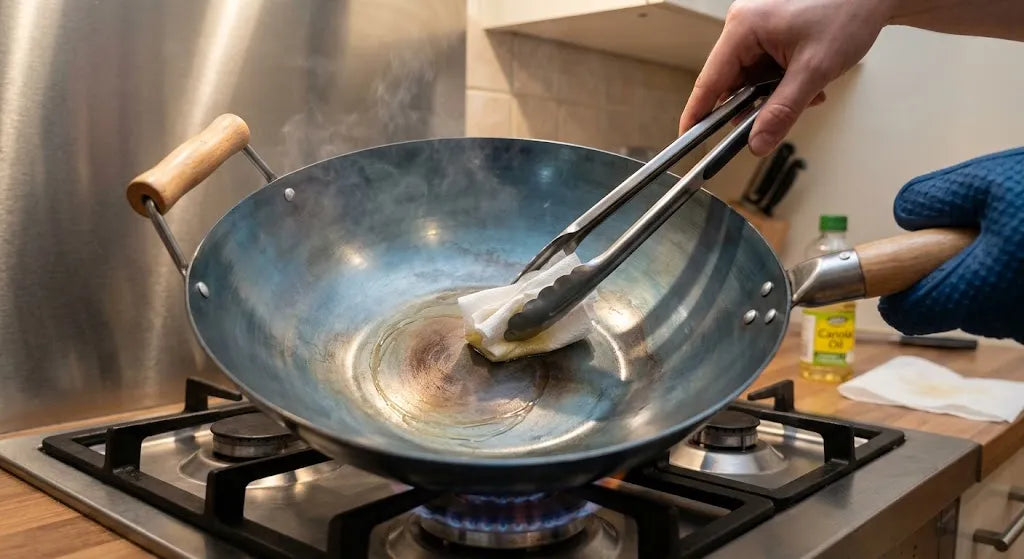
Learning how to season a wok is one of the most important first steps when you buy an uncoated carbon steel or iron wok. Proper seasoning creates a protective patina that helps reduce sticking, protects the metal from rust and improves naturally as you continue cooking.
This guide applies specifically to uncoated carbon steel and iron woks. Stainless steel, titanium, ceramic-coated and other types of cookware have different care requirements and should be maintained according to the manufacturer's instructions.
If you are still choosing your cookware, compare Uncle Buffalo's Iron & Carbon Steel collection. Iron & Carbon Steel collection
Why Do You Need to Season a Wok?
A new carbon steel or iron wok does not usually have the slick cooking surface that develops after repeated use. Seasoning involves applying a very thin layer of oil and heating it so that the oil bonds to the metal.
This process is known as polymerisation. At high temperatures, components of the cooking oil form a thin polymerised layer on the surface. The chemistry behind cookware seasoning is explained in more detail by the American Chemical Society's Chemical & Engineering News. chemistry of cookware seasoning
With regular use and care, these thin layers gradually develop into the darker patina associated with a well-used carbon steel wok.
Seasoning provides two main benefits:
-
It helps reduce food sticking to the cooking surface.
-
It creates a protective barrier that helps reduce exposure of the iron-containing metal to moisture, lowering the risk of rust.
If you are comparing different cooking surfaces, Uncle Buffalo also explains the differences between stainless steel and non-stick cookware. stainless steel and non-stick cookware
What You Need to Season a Wok
Prepare everything before you start because the wok will become very hot.
You will need:
-
An uncoated carbon steel or iron wok
-
Mild dishwashing liquid for the initial wash
-
A sponge or suitable scouring pad
-
Paper towels
-
Long-handled kitchen tongs
-
Heat-resistant oven mitts or a dry kitchen towel
-
A neutral cooking oil with a relatively high smoke point
-
Good kitchen ventilation
Suitable oils can include canola, grapeseed, peanut or another neutral high-heat cooking oil.
You only need a very small amount of oil for each seasoning layer. Using too much is one of the most common reasons a wok becomes sticky instead of developing a smooth patina.
Step 1: Check the Manufacturer's Instructions
Before seasoning a new wok, check the product instructions.
Some carbon steel and iron woks require seasoning before their first use, while other cookware may already have a factory treatment or seasoning.
More importantly, do not use this process automatically on a stainless steel, coated or titanium-surfaced wok. Those materials can have completely different maintenance requirements.
You can compare the different styles available in Uncle Buffalo's Wok & Frypans range before deciding which maintenance method applies to your cookware. Wok & Frypans range
Step 2: Wash the New Wok
Many new uncoated carbon steel woks are supplied with a protective layer designed to reduce rust while the product is being stored and transported.
Wash the wok thoroughly with warm water and mild dishwashing liquid according to its care instructions.
Scrub the interior and exterior surfaces until any protective residue has been removed.
Rinse thoroughly with clean water.
The Woks of Life also recommends washing a new carbon steel wok before beginning its first seasoning process. first-time wok seasoning guidance
Step 3: Dry the Wok Completely
After rinsing, wipe the wok with a clean towel.
Place it on the stove over low to medium heat so that any remaining moisture evaporates.
This step is important because carbon steel contains iron and can develop rust when moisture remains on an exposed surface.
Once the wok is completely dry, you can begin heating it for seasoning.
Step 4: Heat the Wok
Increase the heat gradually.
If your wok's manufacturer recommends bluing, continue heating the bare wok while carefully rotating and tilting it so that the bottom and sides are exposed to the heat.
Depending on the particular carbon steel, you may notice the surface changing from silver to shades of bronze, blue or darker grey.
Do not worry if the colour is uneven. Carbon steel does not need to look perfectly uniform.
Keep the Kitchen Well Ventilated
Wok seasoning can produce smoke, so switch on the rangehood and open nearby windows before beginning.
Do not disable, remove or cover your smoke alarm.
Australian fire-safety guidance advises against disabling smoke alarms even when cooking causes an unwanted activation. Australian smoke alarm safety guidance
Keep children and pets away from the cooking area and use heat-resistant protection when handling hot cookware.
Step 5: Apply a Very Thin Layer of Oil
Allow the wok to cool enough to handle safely while it remains warm.
Add a small amount of your chosen seasoning oil.
Using kitchen tongs and folded paper towel, carefully spread the oil around the entire cooking surface.
The most important part of this step is removing the excess.
After spreading the oil, wipe the wok again with a clean section of paper towel. The surface should look almost dry rather than wet or glossy.
A thick layer of oil is more likely to leave a sticky or uneven coating.
Serious Eats similarly recommends buffing carbon steel until only a very thin film of oil remains before heating it. carbon steel seasoning technique
Step 6: Heat the Oiled Wok
Return the wok to the stove and heat it according to the manufacturer's seasoning instructions.
As the surface becomes hot, you may notice a small amount of smoke.
Rotate the wok carefully where necessary so that the heat reaches different parts of the cooking surface.
Continue until the oil has formed a dry-looking layer rather than a wet or sticky coating.
Turn off the heat and allow the wok to cool naturally.
Avoid suddenly cooling a very hot wok with cold water because rapid temperature changes can contribute to warping, particularly with thinner cookware.
Step 7: Repeat With Additional Thin Layers
One layer creates the beginning of the seasoning, but several thin layers can produce a stronger base.
Once the wok has cooled:
-
Apply another extremely thin layer of oil.
-
Wipe away the excess.
-
Heat the wok again.
-
Allow it to cool.
You can repeat the process two or three times if recommended for your wok.
Do not judge the seasoning by colour alone. A newly seasoned wok may look bronze, brown, blue, dark grey or slightly patchy.
A darker patina will gradually develop as you cook.
Do You Need Ginger and Spring Onion When Seasoning a Wok?
Some traditional wok-seasoning methods include stir-frying ginger, spring onion or other aromatics after the initial oil treatment.
This step is optional rather than essential to the polymerisation process.
If you want to use this method, add a small amount of oil and stir-fry sliced ginger and spring onion over moderate heat, moving the ingredients around the bottom and sides of the wok.
Discard the aromatics afterwards.
The important part of seasoning remains the combination of a clean, dry cooking surface, a very thin film of suitable oil and controlled heating.
How to Clean a Seasoned Wok
Regular maintenance is simpler than the initial seasoning process.
After cooking:
-
Allow the wok to cool to a safe temperature.
-
Rinse it with warm water.
-
Remove food residue with a soft sponge or suitable wok brush.
-
Dry the wok thoroughly.
-
Heat it briefly if necessary to remove remaining moisture.
-
Apply a very thin layer of neutral oil before storing if recommended.
Contrary to a common cookware myth, a small amount of mild dishwashing liquid does not necessarily destroy a properly polymerised seasoning layer.
However, avoid soaking a carbon steel wok in water or putting it in a dishwasher.
For more general cookware advice, browse Uncle Buffalo's Cookware Tips guides. Cookware Tips
How to Stop Food Sticking to a Wok
Seasoning is only part of preventing food from sticking.
Heat management is equally important.
A common wok cooking technique is to:
-
Preheat the wok.
-
Add cooking oil.
-
Swirl the oil around the surface.
-
Add your ingredients once the wok and oil are ready.
Do not overcrowd the wok. Adding too much cold food at once can rapidly lower the surface temperature and make effective stir-frying more difficult.
Different pans also react differently to gas, electric and induction cooktops. Uncle Buffalo's guide to fry pans for gas stoves provides further information about cookware materials and heat response. fry pans for gas stoves
Why Is My Wok Sticky After Seasoning?
A sticky or gummy surface usually means that too much oil was left on the wok or the oil did not fully form a thin seasoning layer.
To prevent this problem, remember:
Thin layers are better than thick layers.
Before heating the wok, wipe the oil until the surface almost appears dry.
If sticky residue has already developed, follow the manufacturer's cleaning instructions and remove the affected residue before applying another very thin seasoning layer.
What Should You Do If a Wok Rusts?
Small areas of surface rust do not necessarily mean that a carbon steel wok needs to be replaced.
Remove the rust carefully using an appropriate abrasive or cleaning method recommended by the manufacturer.
Then:
-
Wash away all loose rust.
-
Dry the wok completely.
-
Heat it to remove remaining moisture.
-
Re-season the exposed area with thin layers of oil.
Rust commonly develops when carbon steel remains damp, is soaked for too long or is stored before being completely dried.
How Often Should You Season a Wok?
You do not normally need to complete the entire first-time seasoning process every time you use the wok.
Instead, the patina develops through normal cooking and maintenance.
You may need to re-season the wok when:
-
Rust appears.
-
Large areas of seasoning have been removed.
-
The cooking surface becomes persistently sticky.
-
The wok has been deeply cleaned back to bare metal.
-
It has been unused for an extended period and the protective surface has deteriorated.
Regular cooking with appropriate oils will gradually improve the patina.
What Should You Cook First in a Newly Seasoned Wok?
After seasoning, start with straightforward dishes containing some cooking oil.
Stir-fried vegetables, noodles and other everyday stir-fries are practical choices.
During the first few uses, you may want to minimise prolonged cooking with highly acidic ingredients such as vinegar-heavy sauces or tomatoes because acidic foods can affect a developing seasoning layer.
As the wok is used regularly, the patina will continue to change in colour and appearance.
That is normal.
Your Wok Is Ready to Cook
Learning how to season a wok does not require creating a perfectly black cooking surface on the first attempt. The goal is to establish a thin, protective base and then allow regular cooking to build the patina naturally.
Keep the wok dry, use thin layers of oil when required and avoid soaking carbon steel cookware for long periods.
If you are looking for a new wok for stir-frying, high-heat cooking or everyday meals, explore Uncle Buffalo's range of woks and frypans to compare the available materials, sizes and styles. range of woks and frypans